AI 画得很可爱,但为什么不像我?The AI Made It Cute — But Why Doesn't It Look Like Me?
从一张 Q 版头像出发的小实验:好看不等于像我,风格统一不等于人物一致,以及怎样把反复试错沉淀成一套能和我一起变化的视觉语言。I used everyday photos to design a chibi avatar that felt like me, then tried it in a 52-pixel crop.
- AI 绘画
- 角色设计
- Q 版头像
- 视觉一致性
- 设计实验
- AI Illustration
- Character Design
- Chibi Avatar
- Visual Consistency
- Design Experiment
从一张 Q 版头像,到一次关于个人风格、AI 生成与设计迭代的小实验。
01|我只是想要一张可爱的头像
事情的起点其实很简单。
我想根据自己平时拍摄的照片,生成一张可爱的 Q 版头像。可以有一点兔子元素,最好有些《疯狂动物城》里朱迪那样的灵动和俏皮。
我原本以为这会是一件非常简单的事情。
上传照片,描述风格,等待 AI 生成。
毕竟,现在的图像生成模型已经能够画出非常漂亮的插画。精致的五官、柔和的配色、细腻的光影,甚至连发丝和衣服纹理都能处理得很好。
但实际生成之后,我发现了一个问题:
它确实很可爱,可我总觉得那不是我。
有些版本太甜美,有些过于卡通。有些虽然保留了黑色头发,却完全改变了我平时的穿搭气质。
还有些图片本身很好看,但我根本不想拿来当头像。
这让我开始思考:一个好看的 AI 形象,和一个真正属于自己的数字形象,究竟有什么区别?
02|好看,不等于适合
在这次创作中,我反复给 AI 提供了很多照片。
有穿着灰色针织开衫、牛仔裤的照片,也有白色外搭配彩色印花连衣裙的照片;有戴着圆框眼镜的,也有不戴眼镜的;有在公园里拍摄的,也有在咖啡馆、展览和夜晚街道拍摄的。
这些照片并不是完全相同的风格。
我也不希望自己的数字形象永远只穿一套衣服、只有一种表情。
但我希望,无论换成什么场景,它看起来仍然是同一个人。
最初,我并没有办法准确描述这种感觉,只能不断给出反馈:
「我需要 Q 版的,不是这种。」
「这不是我平常的风格。」
「可以有兔子元素,但不一定要变成朱迪。」
后来,我发现自己真正想保留的,并不是照片中的每一个细节。
而是几个相对稳定的特征:
- 自然、有层次感的黑色中长发。
- 比较舒适、日常的穿衣方式。
- 不刻意夸张的表情和气质。
- 一点俏皮,但不需要过度甜美。
- 眼镜、手表、包包等可以根据照片变化的配饰。
也就是说,我想让 AI 学习的不是某一张照片,而是照片背后相对稳定的个人风格。
这很像我们认识一个人的过程。
一个人可以换发型、换衣服、换环境,但我们通常还是能够认出对方。
可生成模型未必能在多轮创作中自然地维持这种连续性。
03|当我开始知道自己不想要什么
这次实验有一个挺有意思的过程。
一开始,我说不清楚自己到底要什么,但我能判断哪些生成结果不符合预期。
看到不喜欢的版本后,我开始逐渐排除一些设计方向。
不要过于粉色的甜妹风,不要夸张的娃娃妆,不要与现实穿搭毫无关系的服装,也不要让兔子元素完全盖过人物本身。
当这些不喜欢的元素逐渐被排除,真正想要的风格反而开始清晰起来。
后来,我找到了一种比较喜欢的表现方式:
日系手绘 Q 版 + 复古手账拼贴 + 水彩纸张质感 + 兔子伙伴。
画面不需要追求照片级的相似,也不需要特别华丽。
有柔软的手绘线条、略带颗粒感的纸张纹理、奶油色背景和适度的装饰就很好。
兔子也不一定非要长在我头上。
它可以是一个发夹、一枚胸针,或者是一只趴在肩膀上的小伙伴。
我特别喜欢后面这种设定。
人物仍然是我,兔子则成为这个数字形象世界中的另一位角色。
它们之间可以有互动,可以一起出现在不同场景里。
于是,一张普通的 Q 版头像开始有了一点角色设计的意味。
04|从单张图片,到一组拥有共同特征的角色
确定基本画风之后,我又尝试使用不同照片生成头像。
咖啡馆、夜晚的公园、展览现场、公交车、日常自拍……
这些场景里的我有不同的动作、表情和服装。
我想知道:如果让 AI 保持同一个人物设定,只改变场景和穿搭,会发生什么?
结果是,有些版本已经能够保持比较接近的视觉语言。
但同时也出现了一些问题。
比如,没有戴眼镜的原始照片,有时会被自动加上眼镜;一些日常服装被改变了细节;同一只兔子伙伴在不同图片中,也可能出现服装、比例和表情上的差异。
这些变化让我意识到,风格统一和人物一致性并不是同一个问题。
一组图片看起来都属于日系手绘风格,并不代表它们描绘的是同一个人物。
同样,保留眼镜、黑色头发等外在符号,也不一定意味着人物真的具有足够的辨识度。
如果以后希望把它发展成长期使用的个人数字形象,还需要更明确的角色规范。
例如,哪些特征应当固定,哪些特征允许根据照片改变?兔子伙伴的基本外形是否需要保持一致?不同画面应当采用什么样的配色与构图?
这些问题,不能只靠一句「保持角色一致性」就保证解决。
05|一张插画,还需要真的能当头像
在创作过程中,我还遇到了另一个容易忽略的问题。
一些生成图片在大图状态下非常漂亮。
有丰富的背景、可爱的小兔子、各种装饰贴纸,甚至有城市风景、邮票和文字。
但真正放进社交平台的圆形头像框里,人物就会变得很小。
有时候兔子耳朵被裁掉了,有时候脸部不够突出,还有时候背景的颜色和人物混在一起。
于是我开始调整构图。
让人物占据画面的主要部分,让五官更加清晰,把兔子放在靠近肩膀的位置,减少那些缩小后无法辨认的装饰。
我也决定去掉一些真实地名、地址和没有必要的背景文字。
它们对头像本身并没有太大帮助,甚至可能分散视觉注意力。
取而代之的,是一些简单的卡通元素:胡萝卜、兔爪印、星星、爱心,以及具有童话感的背景。
这让我想到一个很基础的产品设计原则:
设计不能只看它完整展示时有多漂亮,还要看它在真实使用场景里是否有效。
对于头像来说,尺寸、裁剪方式、辨识度和信息层级,可能比背景细节更重要。
06|于是,我把这件事做成了 Lumi LAB 实验
如果只是生成几张图片,这次创作到这里就可以结束了。
但我觉得,前面那些反复调整的过程,似乎比最后的图片更值得记录。
所以,我开始把它整理成一个小型的网页实验:
第一版尝试将照片与生成结果关联起来,展示不同版本的视觉变化,并整理人物特征、风格提示词和头像使用时需要考虑的问题。
还加入了头像裁剪模拟、不同尺寸的效果预览等功能,让这件事不只是停留在「看看生成了什么」。
网页的实现主要借助 AI 编程工具完成。我的工作更多集中在提出需求、选择图片、判断视觉方向,以及持续反馈哪些结果符合或不符合预期。
目前,这仍然是一个早期实验原型。
我还没有系统测试不同模型的生成稳定性,也没有足够的数据证明某一套提示词能够持续保持人物一致性。
但它已经帮助我把一件原本很随意的事情,整理成了一个相对清晰的设计过程:
提出想法,生成初稿,发现问题,调整约束,比较结果,沉淀规则,再尝试将它应用到新的场景里。
07|AI 的能力,和我的选择
整个过程中,图像是 AI 生成的。
我并没有亲手画出那些漂亮的线条,也没有独立完成所有网页代码。
这部分能力应该归属于工具。
但另一方面,我也不觉得自己只是按下了一个生成按钮。
因为在一次又一次的修改中,需要有人判断:
这个形象是否符合最初的目的?它有没有保留人物特征?为什么某张图片明明很好看,却不适合作为头像?哪些元素应该保留,哪些应该删掉?
AI 可以提供很多候选结果,但并不能替我决定哪一种形象更能代表我。
当然,这也不意味着审美判断完全属于人类,或者 AI 只能被动执行。很多风格、构图和装饰细节,确实是模型生成过程中带来的新可能性。
我的一些偏好,也是在看到这些结果之后才逐渐形成的。
所以这更像是一种共同探索。
AI 不断提供可能性,我不断发现自己的偏好。
它不是一次准确执行需求的过程,而是一场持续收敛的对话。
08|我们究竟在寻找一个怎样的数字自己?
这次创作最有趣的地方,可能是我最初并不知道自己想要的具体样子。
我只知道,我想要一个可爱版本的自己。
但随着不断比较,我开始发现,自己并不希望一个数字形象完全复制现实,也不希望它变成一个毫无个人特色的漂亮模板。
我可以接受它有一双更大的眼睛,可以接受它身边跟着一只兔子,可以接受它生活在一个充满卡通装饰的世界里。
但我希望,它仍然能保留一些属于我的东西。
那些东西可能是发型、穿搭、表情,也可能是一种很难用关键词描述的气质。
这让我觉得,个人数字形象设计不只是把真人照片变成动漫人物。
它也是一个不断认识、筛选和表达自我形象的过程。
而且,这个过程未必需要存在唯一正确的答案。
今天喜欢的形象,过一段时间可能又想调整。
不同阶段的自己,本来就可以拥有不同的表达方式。
我想寻找的,也许不是一个永远固定、完美的数字自己,而是一套能够随着我一起变化的视觉语言。
这也是我希望继续在 Lumi LAB 中探索的方向。
实验档案
- 实验名称: AI Avatar Lab
- 实验类型: AI 辅助视觉设计 / 角色原型 / 交互探索
- 当前阶段: v0.1 原型
- 主要工具: ChatGPT、AI 图像生成工具、AI 辅助编程工具
- 已完成: 多轮头像生成、风格筛选、提示词整理、交互页面原型
- 尚待验证: 跨场景角色一致性、提示词稳定性、小尺寸头像辨识度、不同生成模型间的表现差异
- 在线实验: AI Avatar Lab · Lumi Lab
2026 年 11 月 · AI Avatar Lab 项目手记
这是 Lumi LAB 的一次个人探索记录,不是一份关于 AI 图像生成能力的系统性评测。
01 | I just wanted a cute avatar
I wanted to generate a cute chibi avatar based on photos I take in everyday life. A few rabbit details would be nice, with some of the liveliness and playfulness of Judy from Zootopia.
I figured I could upload a photo, describe the style, and wait for the result.
I liked the soft colors and detailed fabrics in the first batch. Some versions looked too sweet for me. Others kept my black hair and put me in clothes I’d never wear.
It was definitely cute — but it didn’t feel like me.
02 | What I wanted to keep from the photos
I tried photos from cafés, parks, and exhibitions. In one I wore a gray knit cardigan and jeans. In another I wore a white jacket over a colorful dress. I wore my round glasses in some of the photos.
I wanted to recognize the same person across these scenes, even as the outfit and expression changed.
At first, it was easier to react to what I saw.
“I need the chibi version, not this.”
“This isn’t how I normally dress.”
“A few rabbit details are fine. It doesn’t have to look like Judy.”
I used the photos as references for a few recurring details:
- Natural, layered, medium-length black hair.
- A comfortable, everyday way of dressing.
- Relaxed expressions with a hint of playfulness.
I let accessories such as glasses, watches, and bags vary with the photo.
This is a lot like how we get to know a person. They can change their haircut, their clothes, their surroundings, and we still recognize them.
03 | Finding a style by ruling things out
Seeing the results helped me rule out the sugary pink palette and doll-like makeup. I settled on this combination:
Japanese hand-drawn chibi + vintage journal collage + watercolor paper texture + a rabbit companion.
I liked the soft lines, grainy paper, cream background, and modest decoration. The rabbit could be a hair clip, a brooch, or a small companion. That’s when an ordinary chibi avatar started to feel a little like character design.
04 | Keeping the same character across scenes
Once I’d settled on the drawing style, I tried it on photos from different scenes, including a nighttime park, an exhibition hall, and a bus. Several illustrations looked like they belonged in the same sketchbook, even when the AI added glasses I wasn’t wearing or changed the details on my clothes. The rabbit could change size, outfit, and expression from one picture to the next.
In the first character spec, I kept the layered black hair and relaxed expression. The clothes come from the reference photo, and glasses appear only when I’m wearing them. The rabbit has gray fur and long ears with pink insides.
I can use these rules to review new images. I still need to test how reliably the same character comes through across scenes.
05 | What survives a 52-pixel crop?
At full size, I can see the little charms hanging from the bag in the café illustration. In the Lab’s 52 × 52 px circular preview, the charms blur together. At 1.3× zoom, my face is easier to pick out and the edge of the circle clips one of the rabbit’s ears.
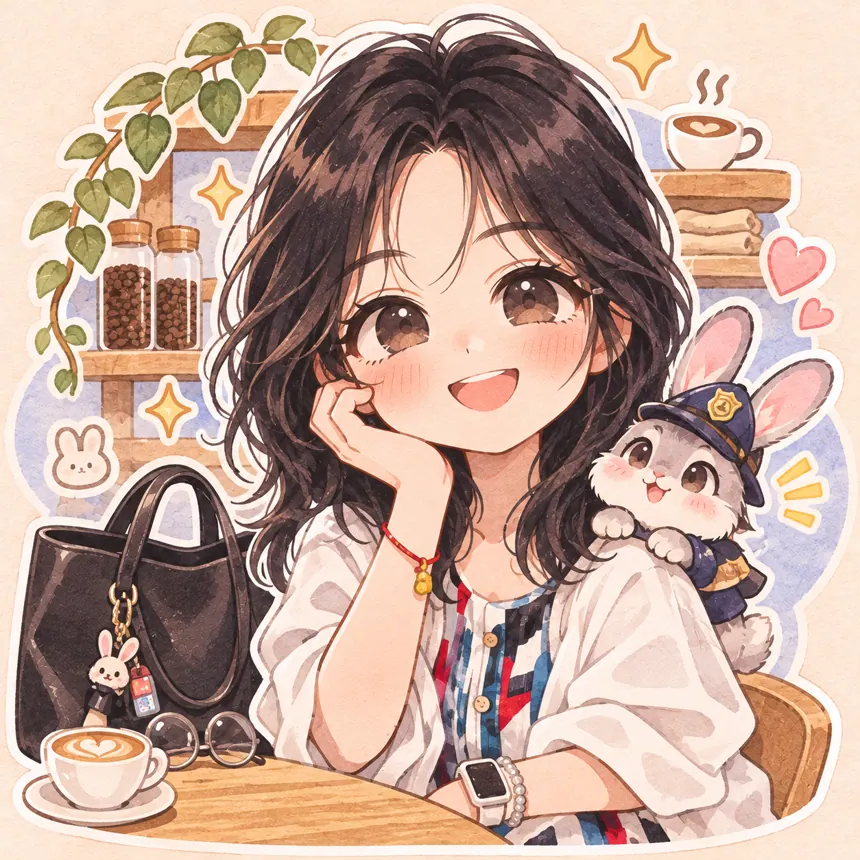
For the avatar composition, I asked for more room for the face and moved the rabbit closer to the shoulder. I replaced signs and place names with small drawn details like paw prints and stars.
Try the café portrait in the crop simulator (interface in Chinese).
06 | Turning the work into a Lumi Lab experiment
I built AI Avatar Lab (interface in Chinese) to record the decisions behind the images. A slider lets you compare ten reference photos with their illustrations, and four short notes trace the main changes I made. The prototype also includes the character spec, a reusable style prompt, and the crop simulator.
I used AI coding tools to build the prototype. I chose the images and decided what details to preserve across scenes. I still need to test how well the prompt holds up across models and repeated runs.
07 | How the generated images changed my mind
I started out asking for rabbit details. Seeing the generated images helped me decide I liked the rabbit best as a companion on my shoulder. That gave me a clearer direction for the next round. I could put the two characters in different scenes and see what the rabbit might do in each one.
08 | What kind of digital self am I looking for?
At the start, I only knew I wanted a cuter version of myself. I can live with bigger eyes, a rabbit by my side, and a world full of cartoon decoration. I want the character to keep some of what is mine. That might be the haircut, the way I dress, or an expression I recognize.
The character I like today might change in a few months. I’d like to keep exploring a visual language that can change with me.
Experiment archive
- Experiment: AI Avatar Lab
- Type: AI-assisted visual design / character prototype / interactive exploration
- Stage: v0.1 prototype
- Main tools: ChatGPT, AI image generation, AI coding tools
- Done: multi-round avatar generation, style selection, prompt consolidation, interactive page prototype
- To verify: cross-scene character consistency, prompt stability, small-size avatar legibility, differences between models
- Lab prototype: AI Avatar Lab · Lumi Lab (interface in Chinese)
November 2026 · AI Avatar Lab project notes