CASE STUDY
2026.10 · 截至 10.26 的实践复盘 · 个人项目 · AI 协作Oct 2026 · practice reviewed through Oct 26 · Personal project · AI-assisted
会务实践:一处资料变更,怎样跟到最后一个交付物
我参与线上会议的资料准备、物料制作、现场执行和会后交付。日程、串场 PPT、人物介绍、配音和总结材料,往往来自不同文件,也会在不同时间更新。
这些任务让我开始关心一个很具体的问题:一处资料改了,怎样知道最后发出的每份材料都跟上了?我把反复遇到的工作整理成清单、模板和项目 Skill,再让 AI 协助制作与核对。
这篇案例来自真实任务的流程文档、制作记录和复核经验。客户、人员、日期、号码、结算及原始交付物均不公开,配图仅是流程示意。
| 项目速览 | 内容 |
|---|---|
| 我的工作 | 资料整理、会前物料制作与复核、现场执行、交付跟进及方法整理 |
| AI 的参与 | 整理输入、辅助 PPT 与人像制作、准备配音稿、检查疑点和起草交接材料 |
| 现有依据 | 多场任务中的物料制作与复核记录,以及逐步整理的流程、模板和 Skill |
| 当前限制 | 新的变更同步与催收约定待真实场次试跑,没有节省工时或降低错误率的测量结果 |
先弄清楚哪一份资料能作为依据
准备一场会议时,日程、人物介绍和临时消息可能并不一致。配音稿又可能是根据旧 PPT 写的。如果让 AI 把几份材料互相印证,看起来很完整,错误也可能被一起传下去。
现在的约定是先登记关键字段的原始来源、确认状态和缺口。资料冲突时列为待确认;缺少信息就保留空缺,已经确定的部分先做。由旧材料生成的稿子,可以用来检查一致性,但不能反过来证明原始信息正确。
这里增加了一些记录工作,换来的是后续修改时能找到依据。它是否值得这份成本,仍需要在真实场次中记录耗时与返工原因。
一处修改,需要有一张影响清单
同一条人物信息可能出现在 PPT 正文、日程单页、图片、配音稿和音频里。正文替换完成后,图片上的旧文字或内嵌音频仍可能留下来。
我把变更处理整理成一条路径:登记旧值、新值和来源,列出受影响物料,再逐件同步和核对。每一件都记录当前文件、版本、已检查范围与未完成项。上游资料变化和 AI 提取、理解或替换错漏也分别登记,方便回头判断返工来自哪里。
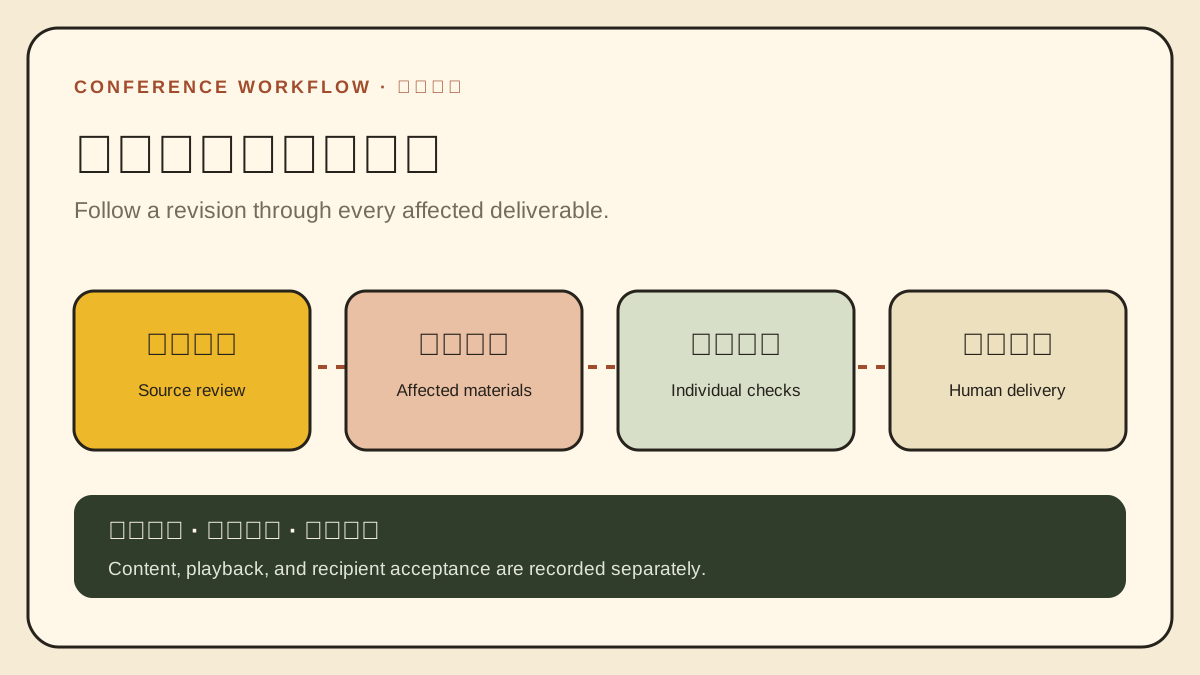
匿名流程示意,不是客户材料,也不表示所有环节已经自动执行。
这套新增约定已经写进工作流文档,还没有完成下一场真实执行的效果验证。当前仍由人逐件确认,跨文件同步和对外发送没有自动化。
制作完成以后,还要分别检查内容和播放
PPT、人像和配音的制作中,单一检查很容易给人过早的确定感。
人像透明了、裁切参数正确了,还要回到原照和实际页面,看头肩比例、边缘与圆框衔接。文档里的号码被视觉模型读出来了,也不能独立证明页面已替换正确。核验报告写了“已修改”,还要看实际交付的那个文件。
因此,清单把几个动作分开:
- 内容逐项对照已确认的来源,检查旧场次文字、图片和音频残留。
- 渲染实际页面,检查版式、人像与文字是否合适。
- 在使用软件中放映并逐段试听,检查切页和嵌入音频。
- 核对交付包使用的文件与当前版本一致,再由人确认发送。
已有制作和渲染记录只能说明对应文件检查到了哪一步,不能替代 PowerPoint 或 WPS 中的实际放映与试听。未完成的检查需要继续保持可见。
会后交付,也需要保留中间状态
会后材料会陆续收到。“已经收到”“检查通过”“已经发送”和“对方验收”是不同的进度。
我把资料催收整理为按人、按材料登记的表格:缺什么、为什么缺、当前文件在哪里、下一次何时跟进。AI 可以帮助盘点和准备消息草稿;对外发送、交付确认和结算由人处理。
这部分新流程目前完成的是文档和模板整理,还不能宣称自动催收已经运行,也没有催收效率的测量结果。
从一次制作,留下下一次能继续用的方法
重复任务逐渐沉淀出不同层次的材料:清单提醒检查哪些事,模板保存需要填写的信息,Skill 记录需要结合原照、版式或项目要求做判断的操作。
例如,人像构图按指定终版的头肩视觉大小来适配,先做样张,再逐人调整;配音稿、音频文件和实际播放分别核对。这些方法来自已有任务,适用范围也跟着记录下来。
我希望积累的是一套下次还能接着使用的方法。下一步应在真实场次中记录资料变更、AI 错漏导致的返工、缺件盘点耗时和实际交付反馈,再决定哪些环节值得继续脚本化。
截至本次整理,能够确认的是已有真实任务和制作复核记录,以及可复用的文档与项目 Skill。整套新增工作流的效果、现场播放与每一场交付验收,都需要各自的实际证据。
Conference practice: following one revision through to the last deliverable
I work on materials, pre-event production, live operation, and post-event delivery for online conferences. Agendas, presentation slides, speaker introductions, narration, and summaries often arrive in separate files and change at different times.
These assignments led to a practical question: when one detail changes, how do we know every deliverable has caught up? I have been turning recurring work into checklists, templates, and project Skills, with AI helping produce and review materials.
This case draws on workflow documentation, production records, and review experience from real assignments. Client and participant identities, event dates, numbers, settlement information, and original deliverables are omitted. The illustration is a workflow diagram only.
| At a glance | Scope |
|---|---|
| My work | Materials, production and review, event operation, delivery follow-up, and reusable methods |
| AI involvement | Organizing inputs, assisting slide and portrait production, preparing narration drafts, flagging issues, and drafting handoffs |
| Existing evidence | Production and review records from multiple assignments, plus evolving procedures, templates, and Skills |
| Current limit | New revision and collection procedures still need a real-event trial; time savings and error reduction have not been measured |
Establish which material can support a fact
An agenda, a speaker biography, and a late message may disagree. A narration draft may have been written from an older presentation. Asking AI to cross-check these documents can carry the same error through several apparently consistent files.
The current procedure records the original source, confirmation state, and gaps for key fields. Conflicts remain pending confirmation. Missing information stays missing while confirmed sections can proceed. Derived drafts help check consistency, but cannot establish the correctness of the original information.
This adds recording work so that later revisions have a traceable basis. Whether the benefit justifies the overhead still needs timing and rework records from real events.
Give each revision an impact list
One speaker detail may appear in slide text, the agenda image, embedded graphics, a narration script, and audio. Replacing the text can leave the old version inside an image or embedded recording.
The procedure records the old value, new value, and source, then lists affected materials for individual updates and checks. Each item retains its current file, version, checked scope, and open work. Upstream changes and AI extraction, interpretation, or replacement mistakes are recorded separately so that the causes of rework can be examined later.
An anonymized workflow illustration, not client material or evidence that all steps run automatically.
These new conventions are documented, but their effects have not been evaluated in the next real event. People still confirm each item; cross-file updates and external sending are not automated.
Check content and playback separately after production
Slide, portrait, and narration production can invite premature confidence from a single successful check.
A transparent portrait with valid crop settings still needs comparison with the original photo and the rendered slide: head-and-shoulders scale, edges, and frame fit matter. A visual model reading a number cannot independently establish that the slide was correctly updated. A report saying a change was made still needs comparison with the actual delivery file.
The checklist therefore separates these actions:
- Compare contents with confirmed sources and check for leftover text, images, and audio from previous events.
- Render the actual pages and inspect layout, portraits, and text.
- Present and listen in the intended software to inspect slide transitions and embedded audio.
- Confirm that the delivery package contains the current files before a person sends it.
Production and rendering records establish only what was checked for those files. They cannot replace actual presentation and listening in PowerPoint or WPS. Unfinished checks remain visible.
Preserve intermediate states after the event
Post-event materials arrive gradually. Received, reviewed, sent, and accepted are different states.
The collection template records each person and required item: what is missing, why, where the current file is, and when to follow up. AI can help prepare inventories and message drafts. People handle external sending, delivery confirmation, and settlement.
This new procedure currently exists as documentation and templates. Automated collection has not been established, and collection efficiency has not been measured.
Leave a method the next assignment can reuse
Recurring tasks have produced several kinds of material. Checklists identify what to inspect, templates retain fields to fill in, and Skills document operations requiring judgment about source photos, layout, or project requirements.
For example, portrait fitting follows the visual head-and-shoulders scale of an approved template: make a sample first, then adjust each portrait. Narration scripts, audio files, and actual playback are reviewed separately. These methods come from prior assignments and retain their scope of applicability.
I want to accumulate methods that the next assignment can build on. The next step is to record source changes, rework caused by AI mistakes, inventory time, and actual delivery feedback during a real event, then decide which steps justify further scripting.
At this review, the supported claims are real assignments, production and review records, and reusable documentation and project Skills. The effectiveness of the entire new workflow, live playback, and acceptance of each delivery require their own evidence.